Compare cedar vs metal, learn why open-bottom beds grow healthier roots, and choose the right size for real harvests.
By GL Planters Team, gardening experts with over a decade of hands-on experience growing vegetables, herbs, and flowers in ground-level raised beds.
Ground-level raised garden beds combine the benefits of in-ground planting…
Gardeners who grow in ground-level raised beds often report stronger root systems, healthier soil structure, and more consistent harvests over time compared to shallow or sealed beds — insights drawn from years of real backyard gardening experience.
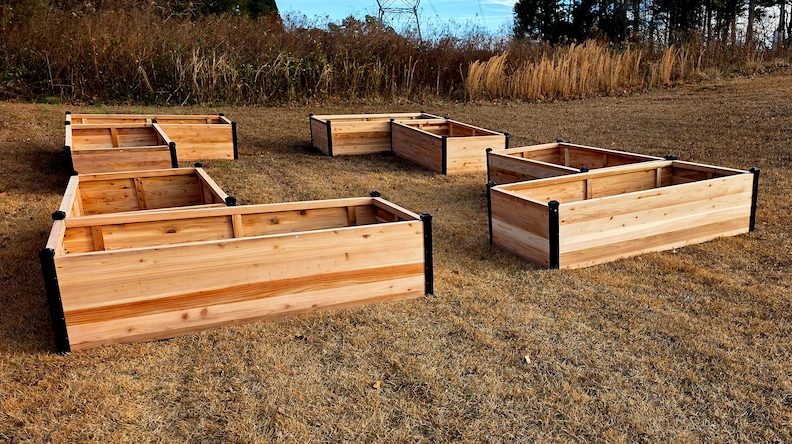
Ground-level raised garden beds sit directly on soil and use an open-bottom design to help roots grow deeper and soil life thrive season after season in real garden conditions.

What Is a Ground-Level Raised Garden Bed?
A ground-level raised garden bed sits directly on the soil and typically uses an open-bottom design (no sealed base).
You get the organization and improved soil control of a raised bed — while still letting plant roots extend into native soil for long-term plant health.
- Deeper roots: Roots can push into native soil for better anchoring and nutrient access.
- Natural drainage: Water moves downward instead of pooling in a sealed box.
- Better soil biology: Open-bottom beds support microbial life and earthworm activity.
- Long-term garden improvement: Your soil gets better season after season.
Ground-level beds are ideal when you want maximum root health and real harvest capacity — especially for vegetables.
Ground-Level vs Elevated Raised Garden Beds
Both styles work — but they solve different problems. Ground-level beds prioritize root depth and long-term soil performance.
Elevated beds prioritize accessibility and placement on patios or hard surfaces.
| Feature | Ground-Level Bed | Elevated Bed |
|---|---|---|
| Root Potential | Excellent (roots can extend into native soil) | Limited to soil volume inside the planter |
| Drainage | Natural drainage into ground | Depends on base design and drain holes |
| Best For | Vegetables, deep-root crops, long-term gardens | Patios, decks, accessibility needs |
| Setup Location | On soil / lawn areas | Hard surfaces + small spaces |
(Swipe table left/right on mobile)
For gardeners weighing comfort versus root depth, our best elevated raised garden bed guide breaks down size, height, and material trade-offs side by side.
Cedar vs Metal for Ground-Level Raised Beds

Why Cedar Performs Better Outdoors
Cedar is a top choice for organic gardening because it’s naturally resistant to rot and insects without chemical treatment.
It also insulates soil better than metal, helping reduce temperature stress during hot days and cool nights.
- Food-safe material: Great for vegetables, herbs, and edible gardens.
- Natural insulation: Helps protect roots from extreme temperature swings.
- Long-term value: High-quality cedar lasts longer than thin boards.
- Premium appearance: Clean lines that fit upscale landscaping.
Metal Bed Considerations
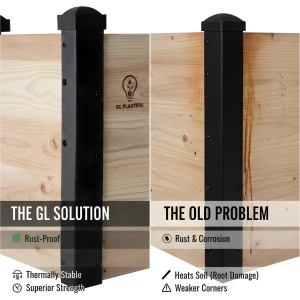
Metal beds can be durable structurally, but they often conduct heat into the soil in direct sun and may dry out faster.
If your goal is stable soil conditions and long-term organic performance, cedar is typically the safer bet.
Why Open-Bottom Beds Grow Healthier Roots
Open-bottom beds let roots grow beyond the bed into native soil. That means deeper nutrient access, better drainage, and stronger plants — especially for long-season vegetables.
In contrast, sealed bottoms and liners can trap moisture and restrict roots.
This creates a “root runway” into native soil.
Best Ground-Level Raised Garden Bed Sizes
The best size depends on your space, what you grow, and how much you want to harvest. For most serious vegetable gardens, wider beds create more layout flexibility
(rows, blocks, and companion planting), and deeper beds support healthier roots.
- Small gardens: 44–48″ length beds for herbs and compact vegetable layouts
- Medium gardens: 60–72″ beds for mixed vegetables and companion planting
- High-yield gardens: 72″ x 36″ footprints for real harvest capacity

Best Picks for Real Gardens
If you want a simple starting point, these options cover the most common garden needs—ground-level harvest space and an elevated alternative for patios or easier access.
72×36 Ground Cedar Raised Garden Bed
- Open-bottom design for deep roots and natural drainage
- 18″ planting depth for vegetables and long-season crops
- Best for serious harvests and long-term soil improvement
- Great for patios, decks, and easier reach while gardening
- Ideal for herbs, greens, flowers, and compact layouts
- Best when you want elevated access and a clean footprint
Recommended option:
72×36 ground cedar raised garden bed
Frequently Asked Questions
Are ground-level raised beds better for vegetables?
They often are, especially for deep-root crops. Open-bottom ground beds support stronger root systems, natural drainage, and long-term soil improvement.
Is cedar safe for organic gardening?
Yes — cedar is widely used for food gardens because it does not require chemical treatment and holds up well in outdoor conditions.
What size ground bed is best for a family garden?
A 72″ × 36″ footprint is a great “family-size” option because it supports multiple crops and layouts while still being easy to reach from the sides.
Want better spacing and higher yields in open-bottom beds? Read our companion planting guide.
