2026 Buyer’s Guide
Compare elevated raised garden bed sizes, 24″ vs 30″ height, cedar vs metal, elevated vs open-bottom ground beds, and the real-world corner/leg durability factor—so you can buy once and grow for years.
Shopping now? Start in our Raised Garden Beds hub and jump straight to the exact size chart:

Quick Answer: What’s the best elevated raised garden bed?
Best all-around elevated bed
A 72″ × 24″ with 30″ comfort height (easy reach + strong yields).
Best for patios & balconies
44″ × 12″ or 44″ × 18″ (compact footprint, still real harvests).
Best for narrow layouts
72″ × 18″ (walkways + row-style gardens; great access).
Best for maximum harvests
A large open-bottom ground bed (deep-root crops love it).
Fast decision rule: choose a size you can comfortably reach, then choose the height you’ll enjoy using weekly. If you want to compare our full collection of cedar raised garden beds, start with our main raised beds guide.
Browse by type: Elevated • Ground (open-bottom) • U-shape layouts • All products. If you’re comparing footprints, use the Large + XL chart.
1) Size Comparisons: Which Raised Bed Size Fits Your Space?
Size affects yield, spacing, watering consistency, and how easy it is to maintain your garden. The best size gives you enough planting area while keeping every plant reachable.
Tip: For elevated beds, a 24″ width is the sweet spot—wide enough for harvests, narrow enough for comfortable reach.
Prefer a quick “shopping view” of footprints? Compare sizes in the Raised Garden Beds hub: Large + XL options or cedar planter boxes.
| Size | Best For | Comfort & Reach | Why Gardeners Choose It | Best Match |
|---|---|---|---|---|
| 44″ × 12″ (Elevated) | Balconies, patios, tight spaces | Very easy to reach | Herbs, greens, compact veggies | View 44×12 |
| 44″ × 18″ (Elevated) | Small gardens & starter beds | Easy reach + good volume | Balanced footprint for vegetables & herbs | View 44×18 |
| 72″ × 18″ (Elevated) | Walkways, row-style gardens | Great access in narrow layouts | Proven width for vegetables and herbs | View 72×18 |
| 72″ × 24″ (Elevated) | Most gardeners (best all-around) | Ideal reach across the bed | More soil volume, spacing, and yield potential | View 72×24 |
| 72″ × 36″ (Ground Open-Bottom) | Maximum harvests + deep roots | Ground-level access | Open-bottom supports deep root growth | View 72×36 Ground |
(Swipe the table left/right on mobile)
Want help planning planting layouts? See our companion planting guide for raised garden beds.
2) How Much Soil Do You Need? (Cubic Feet + Bag Counts)
The fastest way to avoid the “I ran out of soil mid-fill” problem is to plan soil volume first. Below are practical amounts by size (plus easy bag math).
| Planter | Planting Depth | Soil Needed | Approx. Bags (1.5 cu ft) |
|---|---|---|---|
| 44″ × 12″ Elevated | ~9.5″ | 2.5 cu ft | 2 bags |
| 44″ × 18″ Elevated | ~13″ | 5 cu ft | 4 bags |
| 72″ × 18″ Elevated | ~13″ | 9 cu ft | 6 bags |
| 72″ × 24″ Elevated | ~13″ | 12 cu ft | 8 bags |
| 72″ × 36″ Ground (Open-Bottom) | ~18″ | 24 cu ft | 16 bags |
(Bag math: total cubic feet ÷ 1.5. Round up.)
Easy raised-bed soil mix: 50% quality soil/potting mix + 30% compost + 20% aeration (pumice/perlite). Water lightly as you fill so it settles without compacting.
3) What to Plant (By Bed Size)
Match the bed size to what you actually grow most. These are high-success pairings that work in real backyards and patios:
44″ × 12″ (Patio / Balcony)
- Herbs (basil, parsley, cilantro)
- Leafy greens (lettuce, arugula, spinach)
- Radishes + green onions
- Strawberries
- Compact flowers for pollinators
44″ × 18″ (Starter Veg Bed)
- Peppers + basil
- Kale/chard + scallions
- 1 compact tomato + underplanting
- Carrots (short/medium varieties)
- Marigolds near edges for pest support
72″ × 18″ (Narrow Layouts)
- “Salad row” (greens + herbs)
- Beans on a simple trellis
- Carrots + beets (great use of length)
- Strawberries + flowers
72″ × 24″ (Best All-Around)
- Tomatoes + basil + marigolds
- Cucumbers on trellis + greens below
- Peppers + onions
- Bush beans + carrots
- High-yield “kitchen garden” mix
Want a natural pest strategy? Read: Marigolds in raised garden beds (what they actually help with).
4) Height Comparisons: 24″ vs 30″ Elevated Garden Beds
24″ Tall (Reduced Bending)
- Great in tight layouts and walkways
- Easier access as plants mature
- More “garden bed feel” while still elevated
30″ Tall (No-Bend Comfort)
- Best for back and knee comfort
- Standing gardening feels natural
- Ideal for longer harvest sessions
Still deciding between 24″ and 30″? Read: Best height for raised garden beds (24 vs 30).


If you’re searching “best elevated raised garden bed for back pain,” 30″ height is usually the most comfortable long-term.
5) Cedar vs Metal Raised Garden Beds (Root & Temperature Reality)
Cedar (Root-Friendly + Stable)
- Natural insulation helps stabilize soil temperature
- Naturally rot-resistant and insect-resistant
- Food-safe material for vegetables & herbs
- Best when built with thick boards and strong joinery
Metal (Fast Heat + Harsh Swings)
- Can heat up quickly in direct sun
- More intense soil temperature swings
- Often relies on coatings and liners
- Long-term corrosion risk on some components
Want a deeper breakdown on materials? Read: Best wood for raised garden beds (cedar vs treated vs metal).
Bottom line: Thick cedar is a strong long-term choice for gardeners who want stable soil conditions and root-safe performance.
6) Elevated vs Ground-Level Beds: Which Is Better?
| Feature | Elevated Beds | Ground Beds (Open-Bottom) |
|---|---|---|
| Comfort | Excellent (reduced bending) | Moderate (more bending) |
| Root Depth Potential | Limited by planter depth | Deep roots into native soil |
| Best Use | Patios + accessible gardening | Maximum yields + deep-root crops |
| Square-Foot Gardening | Great with a simple grid | Excellent (largest planting area) |
(Swipe the table left/right on mobile)
For maximum harvest capacity and deep-root performance, the 72″ × 36″ open-bottom ground bed stands out. For comfort and accessibility, elevated wins. Browse: Elevated or Ground.
7) Corner & Leg Durability: Why Raised Beds Fail (and How to Prevent It)
In real outdoor use, the most common long-term failure point is predictable: corner stress + leg fatigue after wet/dry cycles and seasonal temperature changes.
GL Planters uses a patented Graphene Fiber-Reinforced Polymer (GFRP) support system designed to be rust-proof, thermally stable, and exceptionally strong at the corners—where many planters eventually loosen or crack.
Practical takeaway: strong corners matter more than almost any “feature” if you want a bed that stays square, stable, and tight for years.
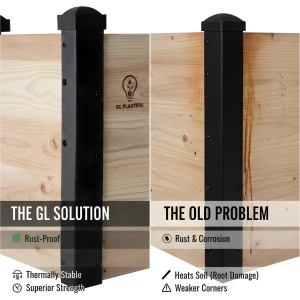
GFRP supports are rust-proof and thermally stable compared to typical steel corner systems.
Best Picks (Based on Common Gardening Goals)
If you’re choosing between a few options, these are the most common “best fit” matches—helpful, not hype.
Best All-Around Elevated Bed

A great balance of reach, planting area, and comfort height for most gardeners.
Best for Small / Medium Spaces

Compact footprint for patios and balconies without giving up build quality.
Best for Max Harvest (Ground-Level)

Maximum planting area and open-bottom root growth for bigger seasonal harvests.
Best Seller (Narrow Layouts)

A proven 18″ width for walkways and row-style gardens—elevated comfort with serious planting space.
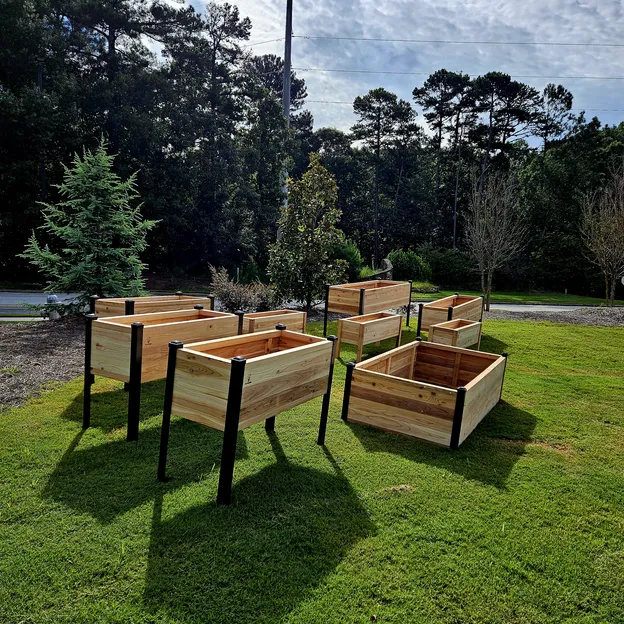
Want to see real installs before choosing? Browse the GL Planters Gallery or visit the FAQ page. You can also compare every footprint in the Raised Garden Beds hub, or browse our full range of elevated cedar planters and shop all planters.
Real Customer Photos (What These Beds Look Like in Real Gardens)
Real customer installs—see how each size looks on patios, decks, and backyard layouts.


Want more examples? Explore the Gallery.
Frequently Asked Questions
What is the best elevated raised garden bed size for most gardeners?
For most people, a 72″ × 24″ elevated bed is the best all-around choice because it balances reach, soil volume, and harvest potential—without feeling too wide to maintain comfortably.
How much soil do I need for a 72″ × 24″ elevated raised garden bed?
Plan for about 12 cubic feet of soil for a 72″ × 24″ elevated bed (commonly ~13″ planting depth). That’s roughly 8 bags if you’re buying 1.5 cu ft bags.
Is a 30-inch tall raised garden bed better for back pain?
Usually, yes. A 30″ comfort-height bed reduces bending and kneeling, which makes it a favorite for gardeners prioritizing back and knee comfort.
Is cedar better than metal for raised garden beds in full sun?
Cedar naturally insulates, helping reduce soil temperature swings. Metal can heat quickly in direct sun, which may stress roots during peak summer conditions—especially in smaller planters.
Do elevated raised beds need plastic liners?
Most well-designed cedar elevated beds do not need liners. Liners can trap moisture and reduce airflow. A built-in drainage base is usually the cleaner, more root-friendly solution.
What’s the difference between elevated and open-bottom ground beds?
Elevated beds maximize comfort and accessibility. Open-bottom ground beds maximize root depth and total harvest capacity by letting roots grow into native soil—great for big seasonal yields.
What causes raised garden beds to fail at the corners, and how do you prevent it?
Corners take the most stress from seasonal expansion/contraction and the weight of wet soil. The best prevention is strong corner reinforcement, tight joinery, and corrosion-resistant structural supports—especially outdoors over multiple seasons.
