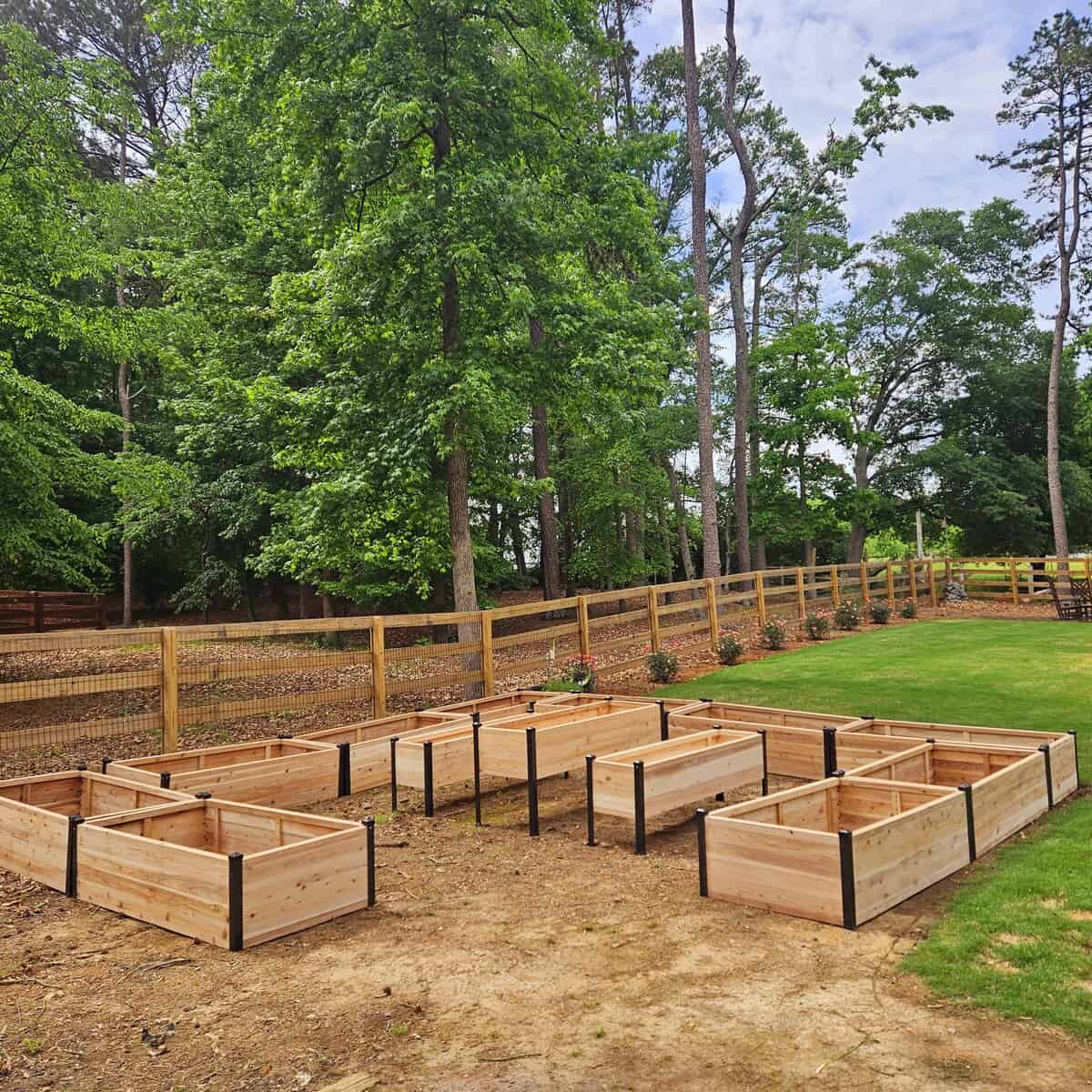
When starting a garden, one key question comes up: Should you grow in the ground or grow vegetables in raised beds? Both methods work, but each has pros and cons. Let’s compare the two to help you choose the best option for your space, time, and goals.
1. Soil Management
Raised beds give full control over soil quality when you grow vegetables in raised beds. You add your own mix of soil—rich in nutrients, free of rocks and weeds. In-ground gardens depend on native soil, which may lack structure or nutrients. Amending ground soil takes time and effort.
Verdict: Raised beds win for soil control.
👉 Shop with GL Planters for durable cedar planters built to grow beautifully.
2. Drainage
Raised beds drain better than most ground plots. This prevents waterlogging and root rot. Beds with open bottoms allow water to escape, while elevated sides help soil dry evenly. In-ground gardens may suffer from poor drainage, especially in clay-heavy soil.
Verdict: Raised beds offer superior drainage.
3. Accessibility
Raised beds reduce bending, kneeling, and strain. Gardeners of all ages find them easier to maintain. They’re ideal for those with limited mobility. In-ground gardens can be hard on the back, knees and make gardening strenuous.
Verdict: Raised beds are more ergonomic.
4. Weed and Pest Management
Raised beds help you grow vegetables in raised beds with fewer weeds. You start with clean soil and often use barriers or mulch to block intruders. Pests like slugs and grubs find it harder to invade. In-ground gardens often come with native weeds, insects, and underground pests.
Verdict: Raised beds make weed and pest control easier.
5. Start-Up Cost
In-ground gardens cost less to start. You dig, amend, and plant. Raised beds require materials—wood, metal, or composite—and soil. But raised beds offer better results with less maintenance long-term.
Verdict: In-ground gardens are cheaper up front; raised beds give better value over time.
6. Space and Layout
Raised beds fit small spaces, patios, and urban areas. Flexible size, shape. Clean, modern look. In-ground needs a large, open area. Less ideal for tight spots.
Verdict: Raised beds work in more spaces.
👉 Check Out: Best Materials for Eco-Friendly Raised Beds and Planters

Final Thoughts
Raised beds give clear advantages: better soil, drainage, access, and design. In-ground gardens work for large spaces with good native soil and low budget needs. But for most home gardeners—especially beginners—grow vegetables in raised beds to enjoy more control, less stress, and better yields. In-ground gardens work for large spaces with good native soil and low budget needs.
🌿 Pro Tip from GL Planters
Choose Cedar—Your Plants Will Thank You!
We recommend only cedar-built planters for safe, successful gardening.
- 🛑 Metal planters can rust and overheat, leading to root stress and plant health issues.
- ⚠️ Composite and treated woods may contain chemicals harmful to both plants and people.
✅ Cedar is 100% natural, non-toxic, and food-safe—perfect for growing vegetables, herbs, and flowers with confidence.
FAQs
Is it better to grow vegetables in raised beds?
Yes, vegetables grow better because when you grow vegetables in raised beds, the soil is healthier, drains well, stays warmer, and has fewer weeds and pests. Raised beds give you more control, so plants grow faster and produce more.
What are the top reasons to grow vegetables in raised beds for better growth?
✅ Top Reasons Veggies Thrive in Raised Beds
1. Better Soil Control
Control soil mix—nutrient-rich, loose, well-draining. Supports strong root growth.
2. Improved Drainage
Raised beds drain faster than ground. Prevents soggy roots, promotes steady growth.
3. Fewer Weeds
Start with clean soil. Defined edges block weed invasion.
4. Warmer Soil = Faster Growth
Soil warms earlier. Extends the growing season—great for tomatoes, peppers.
5. Pest Control
Fewer slugs, grubs, soil diseases. Easier barrier, cover setup.
6. Higher Yield, Less Space
Tight planting, efficient spacing, intensive gardening = more veggies.
7. Ergonomic, Accessible
Less bending, easier upkeep. Great for beginners, older gardeners.
👉 Have questions or need help? Contact us — we’re here to assist you anytime!
