Introduction
Cedar used in planters is cultivated from once-barren hillsides, turning desolate lands into thriving, sustainable forests. Known for its natural fragrance, beautiful grain, and exceptional weather resistance, cedar has become a premium choice for outdoor construction and garden planters.
Cedar wood planters is one of the most highly regarded natural materials for outdoor construction and garden products, valued for its strength and longevity. (Learn more about cedar wood’s natural durability and properties in Britannica).
Quick Answer: Is cedar a good choice for outdoor planters?
Yes — cedar is one of the best outdoor planter materials because it’s naturally durable, dimensionally stable, and performs well in heat and moisture without heavy chemical treatments.
- Best for: vegetable planters, herb gardens, patios, and raised beds
- Why it lasts: cedar’s natural resistance + stable structure outdoors
- Pro tip: thickness and joinery matter as much as the wood species
Comparing layouts and dimensions? Start here: raised garden bed size and height guide .

Key Properties of Cedar Wood
1. Natural Durability
In contrast to untreated pine or other softwoods, cedar does not require heavy chemical treatments to withstand outdoor conditions. As a result, it is a safer and more eco-friendly material, especially when used for growing vegetables and herbs.

2. High Heat Resistance
Cedar wood can endure high outdoor temperatures without warping, cracking, or losing structural integrity. Its cellular structure provides dimensional stability, allowing planters to perform well even under intense summer heat. This makes cedar a superior choice for regions with hot climates where other woods may deteriorate quickly.

3. Moisture and Weather Tolerance
Cedar naturally repels excess moisture, which reduces swelling, shrinking, and splitting. It performs well in humid or rainy environments, making it ideal for garden planters that are constantly exposed to soil, water, and outdoor conditions.
Material choice matters most when paired with the right dimensions, which is why our raised garden bed size and height guide helps gardeners match cedar benefits with proper layout and comfort.
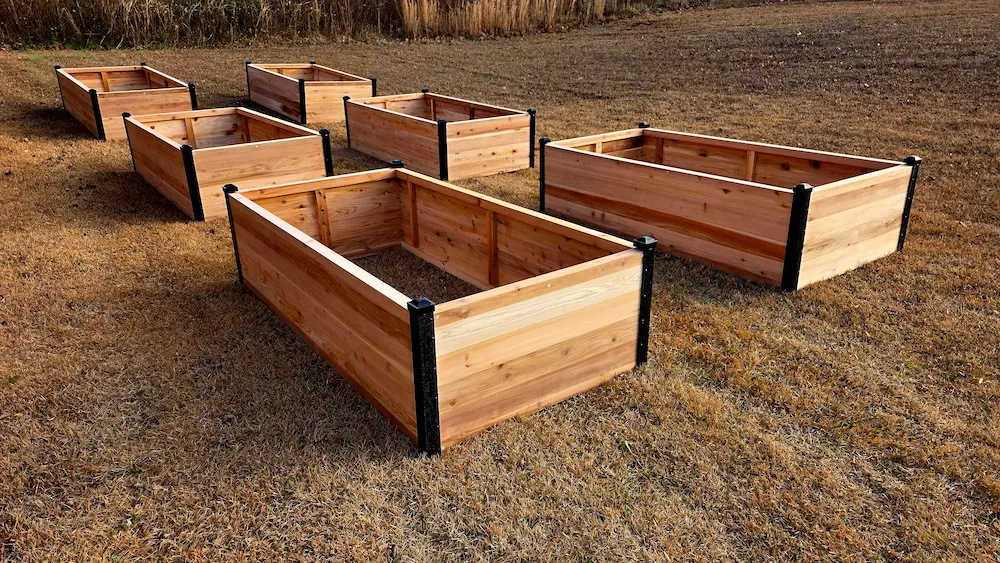
A real-world example of this construction approach is our solid cedar raised garden planter, built with 1″ thick tongue-and-groove boards and an all-cedar support system designed for long-term outdoor performance.

4. Lightweight Yet Strong
Despite being relatively lightweight, cedar maintains excellent strength. In addition, its balance makes it easy to handle during assembly.

5. Aesthetic Appeal
Cedar’s warm reddish-brown tones, straight grain, and pleasant aroma make it visually appealing in any outdoor garden. Over time, it can weather into a silver-gray patina, which many gardeners find attractive and natural-looking.

Applications in Outdoor Garden Planters
Cedar wood planters are especially popular in raised garden beds, ground-level planters, and decorative garden boxes because they hold up exceptionally well in outdoor conditions. These advantages are particularly noticeable in a 72×36 cedar raised garden bed, where thick cedar boards are exposed to soil contact, moisture, and seasonal temperature changes without compromising long-term stability.
- Raised Garden Beds – Cedar is a top choice for vegetable gardens, as it is food-safe and does not leach harmful chemicals into the soil.

- Ground-Level Planters – Perfect for flowers, herbs, and shrubs, cedar planters can be placed directly on lawns, patios, or garden soil.

- Custom Outdoor Planters – Cedar’s easy workability makes it suitable for customized designs, from large rectangular beds to decorative planter boxes for patios and balconies.

Extended Benefits
Extended Benefits
- Sustainability – Cedar is a renewable resource and often harvested from responsibly managed forests.
- Low Maintenance – Cedar requires little more than occasional cleaning. Optional sealants or oils can be applied to further enhance its longevity.
- Longevity – When properly maintained, cedar planters can last 10–15 years or more outdoors. In fact, studies on outdoor materials confirm that natural cedar performs exceptionally well over time, making it a superior choice for sustainable gardening.

.
Conclusion
Cedar wood’s natural durability, high heat resistance, and weather tolerance make it one of the best materials for outdoor garden planters. In fact, these qualities ensure excellent performance in both hot and humid climates. Therefore, whether used for vegetables, flowers, or decorative greenery, cedar guarantees that planters remain not only functional but also naturally beautiful.
Choosing the right material is one of the most important decisions for long-term garden success — which is why many gardeners researching ground-level raised garden beds focus on naturally durable materials like cedar for outdoor use.

Cedar Planter FAQs
How long do cedar planters last outdoors?
With normal outdoor use, cedar planters commonly last for many growing seasons. Lifespan depends most on board thickness, drainage design, and whether the base stays wet for long periods.
Is cedar safe for vegetable and herb planters?
Cedar is widely used for edible gardening because it performs outdoors without requiring heavy chemical treatment. Good drainage and airflow matter just as much for root health.
Do cedar planters need a plastic liner?
Not usually. In many cases, liners can trap moisture and reduce airflow. A better approach is strong drainage and a design that promotes oxygen at the root zone.
Should I seal cedar planters?
Sealing is optional. Some gardeners leave cedar untreated to weather naturally; others use a plant-safe exterior finish for appearance. Avoid anything that could contact soil and isn’t garden-safe.
Is cedar better than metal for root health?
Cedar insulates more naturally and tends to keep soil conditions steadier. Metal can create faster temperature swings in direct sun. Your climate and placement (full sun vs partial shade) matter.
Elevated vs ground planters: which should I choose?
Elevated planters prioritize comfort and accessibility. Ground-level, open-bottom beds can support deeper root growth and maximum yield potential. Compare both here: elevated vs ground comparison.
What cedar thickness is best for long-term outdoor use?
Thicker boards generally hold up better outdoors and resist warping. For raised beds, thickness plus strong joinery and corner/leg reinforcement make the biggest real-world difference.
