Cedar Planter Box Guide
Cedar Planter Boxes: Soil, Planting Tips, and Long-Term Care
Home gardeners that value sustainability, style, and durability love cedar planter boxes. Cedar is a durable option for growing vegetables in a raised bed in your backyard. It is also visually appealing for herbs on a balcony. This comprehensive guide will enhance your gardening experience. It will teach you why cedar is perfect for planter boxes. It will explain how to maintain them and what soil is best to use. You will also find seasonal planting advice and answers to commonly asked concerns.
Want the full overview? Explore our Raised Garden Beds hub, then compare cedar planter box sizes to pick your best fit.

Why Choose a Cedar Planter Box?
One of the greatest materials for outdoor planters is cedar wood.
See Why Our Cedar Planter Boxes Stand Out — Superior Materials, Smarter Design, and Long-Term Durability You Can Trust.
Looking for a dependable, low-maintenance, and attractive addition to your outdoor area?


Naturally rot-resistant:
Cedar doesn’t require as many chemical treatments since it has oils that prevent decay.

Aesthetic appeal:
Your patio or garden will look better thanks to the warm tones and crisp grain of wood.

Pest-repellent
Cedar naturally protects your plants by keeping a variety of insects away. Cedar is an eco-friendly choice.
How to Maintain Cedar Planter Box
Cedar is strong in its natural state, but maintaining your cedar planter box can keep it looking fantastic and prolong its lifespan.
1. Sealing (Optional)
To improve water resistance and increase the wood’s longevity, use a non-toxic, food-safe wood sealer. Although not required, this step is advised if the planter will be exposed to inclement weather.
2. Elevate the Planter
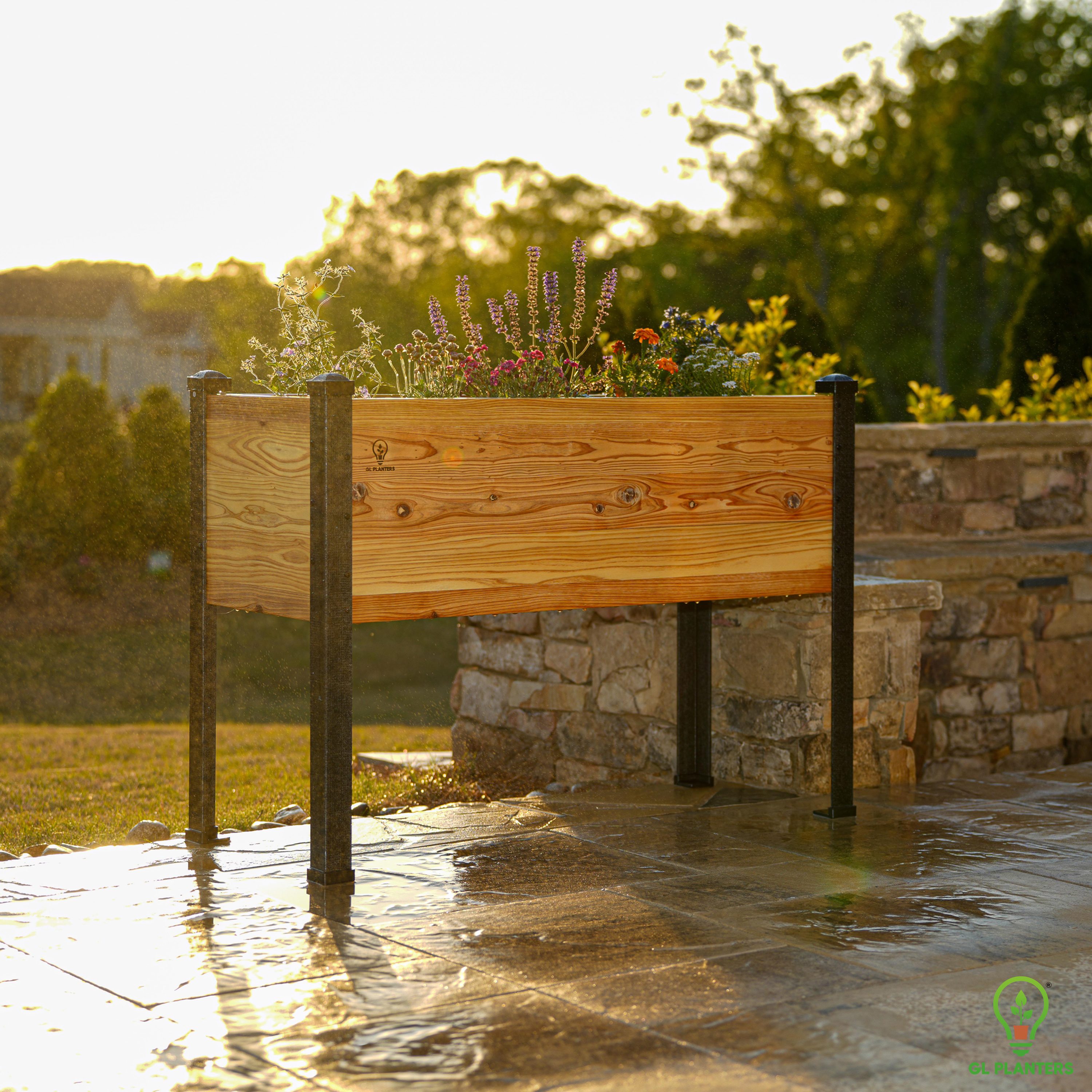
All of our elevated raised planters with GFRP legs come with built-in foot caps.
These help prevent water from pooling underneath—protecting the cedar wood from moisture buildup and helping your planter last even longer.
3. No Liner? No problem.
Unlike many planter boxes that require a liner to prevent water damage, GL Planters are engineered with built-in precision drainage. That means you can plant directly into the cedar box—no fabric, plastic, or extra steps needed. Just add soil, water, and your favorite plants—it’s ready to grow from day one.
4. Check for Cracks
Every year, check for any splitting or warping wood, and reseal if necessary.

Best Soil for Raised Cedar Beds
Using the proper soil is essential for the establishment of healthy plants. The ideal mix for cedar planter boxes is light, nutrient-rich, and well-draining.
The Perfect Soil Mix:
- 60% high-quality topsoil: Acts as the primary growing medium.
- 30% compost: Enhances soil structure and supplies vital nutrients.
- 10% coarse sand or perlite: Improves aeration and drainage.
To further enrich the mixture, you can optionally add organic fertilizers like worm castings or bone meal. To keep nutrition levels stable, replenish the compost component every season.
The lasagna gardening approach is another way to experiment with layering your planter. Beneath your soil mix, place alternating layers of organic materials. These include leaves, grass clippings, and kitchen wastes. This method lowers waste, improves drainage, and increases fertility.
Seasonal Planting in Cedar Planter Boxes
With a little preparation, Cedar Planter Boxes can be used all year round, which is one of their best qualities. Here are some suggestions for every season:
Spring Planting:
- Lettuce
- Spinach
- Peas
- Radishes
These crops thrive in cooler temperatures and grow quickly.
Summer Planting:
- Tomatoes
- Cucumbers
- Basil
- Peppers
Full sun and well-drained soil are ideal for warm-weather crops. For increased yields, think about companion planting.
Fall Planting:
- Kale
- Carrots
- Beets
- Garlic
Start these in late summer so they mature in early fall. Mulch the soil to retain warmth.
Winter Planting (mild climates or covered planters):
- Green onions
- Parsley
- Thyme
- Spinach (again)
To shield crops from frost, use cloches or miniature hoop buildings.
Consider succession planting as well, which is the technique of growing new crops in areas where previous ones have been harvested. This maintains your garden fertile all year long and maximizes your produce.
Design & Placement Tips
- To create a more organic look, arrange planters with even spacing between them.
- To promote regular harvesting, place pots in an area that is easily accessible.
- Combine tall and shallow planters to create a variety of heights.
Choosing the right size matters as much as choosing the right material.
If you’re deciding between elevated and ground beds, see our
44×18 vs 18×48 raised bed comparison.
These straightforward design decisions improve the usefulness and aesthetics of your garden.
When placing your cedar planter, don’t forget one of the most important factors: sunlight. Most vegetables and herbs—especially high-yield plants like tomatoes, beans, and peas—need at least 6 to 8 hours of direct sunlight daily to grow strong and produce generous harvests.
In addition to supporting healthy growth, positioning your GL Planter in a sunny spot enhances the visual appeal of your outdoor space. It makes the space both functional and beautiful.
🌞 Tip: Track sunlight in your garden or patio for a day before placing your planter to find the ideal spot.

FAQs About Cedar Planter Boxes
1. How long do cedar planter boxes last?
2. Do cedar planters need to be lined?
3. Can I paint or stain my cedar planter?
4. Is cedar safe for growing food?
5. What’s the best way to water plants in cedar planters?
💧 Water Deeply—but Not Too Often
With GL Planters’ built-in drainage, keeping your plants healthy is simple. The key is to water deeply but infrequently. This encourages strong root growth.
Let the soil dry slightly between watering, then soak thoroughly to ensure moisture reaches the deeper roots. Our precision drainage ensures any excess water flows out naturally—no soggy soil, no guesswork.
🌿 Tip: Stick your finger 1–2 inches into the soil; if it feels dry, it’s time to water.
6. What can I grow in a cedar planter box?
7. Do cedar planters need drainage holes?
Yes—drainage is essential for any successful garden. That’s why every GL Planter comes with engineered, precision-built drainage already in place. It’s designed to:
- Promote healthy root growth
- Prevent overwatering and root rot
- Support bigger, more productive harvests
With GL Planters, you don’t have to worry about setup or guesswork—just fill with soil, plant, and grow confidently.
Final Thoughts
A cedar planter box is more than just a container. It is a durable, organic, and eye-catching accent. It can improve your yard. It provides a sustainable technique to cultivate seasonal vegetables and fresh herbs with the correct soil, care, and planting plan. Enjoy a flourishing garden all year long by using the above advice to get started or enhance your present arrangement.
Cedar planter boxes are a lovely and useful addition to any green area. They are perfect regardless of your level of experience with raised bed gardening. You may also consider them if you have a desire to upgrade.
Remember that gardening fosters creativity, patience, and serenity in addition to food production. Right outside your door, your cedar planter box can become a magnificent connection to nature. It can also be a daily source of joy.
👉 Have questions or need help choosing the right planter? Contact us today—we’re here to help!
